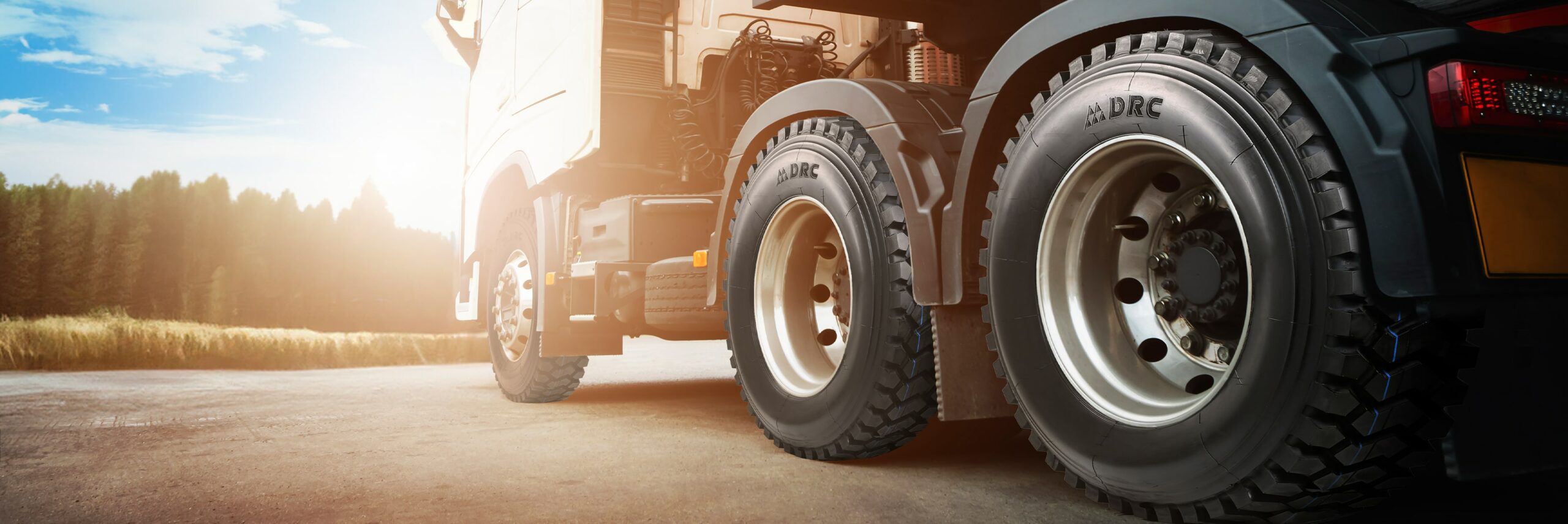

As the tire market in Vietnam becomes increasingly dynamic, counterfeit and low-quality products are appearing in more sophisticated forms. This makes it difficult for consumers and transport businesses to choose trustworthy products. Therefore, understanding how to identify genuine DRC tire – the key to avoiding counterfeit and poor-quality goods – is extremely important to ensure operational safety, save costs, and maintain vehicle lifespan.
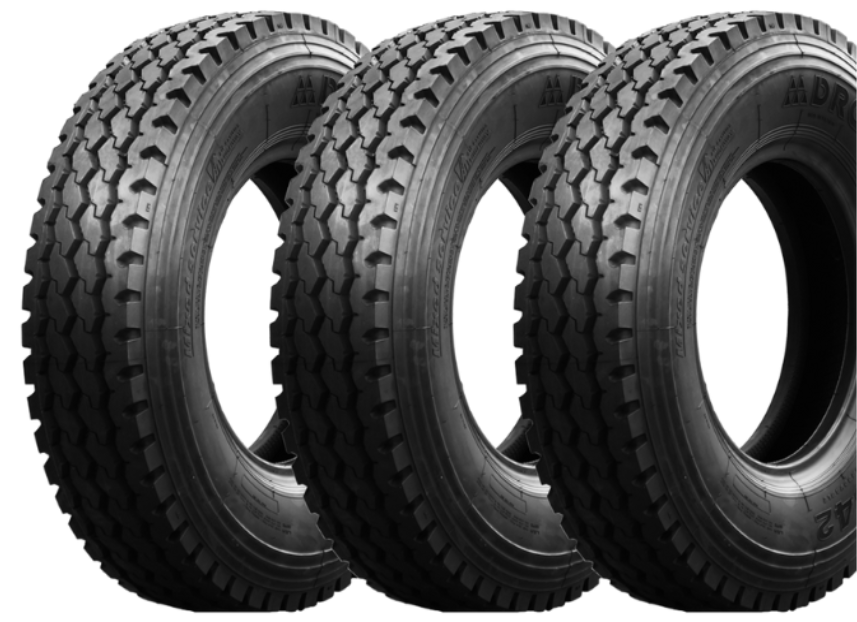
The guide below will show you step-by-step how to check genuine DRC tires, based on real-world experience from technical experts in the tire industry.
1. Why you need to verify genuine DRC tires
Tires—especially truck tires and radial tires—are the components that directly bear loads, absorb impacts, and ensure road grip. Using counterfeit, imitation, or low-quality retreaded tires can lead to risks such as:
- Tire blowouts at high speed, especially on heavy trucks
- Faster wear, resulting in increased fuel consumption due to higher rolling resistance
- Steering instability, particularly on slopes or mountain roads
- Higher repair and maintenance costs due to tire-related failures
- Endangerment of cargo and passengers
Therefore, understanding how to identify genuine DRC tires – the key to avoiding counterfeit and low-quality products – helps protect you from these hidden risks.
2. Check the identification marks on the tire surface
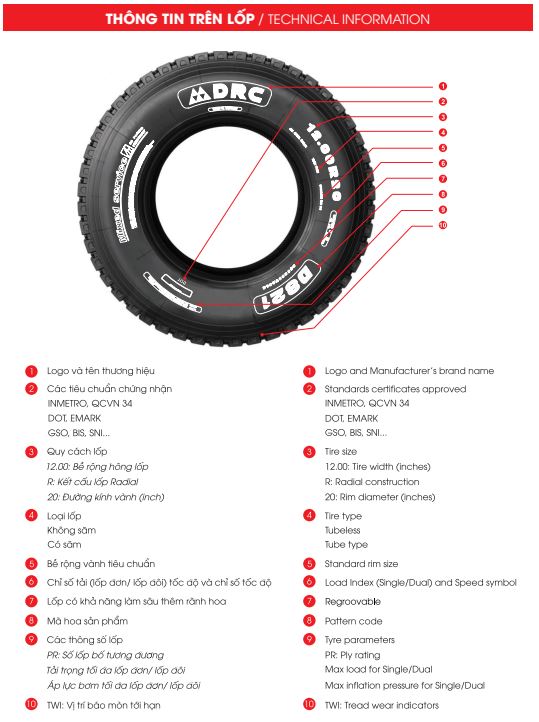
Every genuine DRC tire is embossed clearly and precisely with the following information:
● DRC Logo
The logo is embossed sharply, not blurry or smudged.
Font and spacing are consistent—counterfeit products often fail here.
● DOT Code
The DOT code indicates the plant, size, batch, and week/year of production.
Example: DOT 1KT 2925
→ Week 29 of 2025.
Fake tires usually have faint DOT markings, manually altered codes, or non-standard patterns.
● Size markings & technical specifications
DRC follows international standards, including:
- Size: 11R22.5, 295/80R22.5…
- Load Index / Speed Index
- Ply Rating (PR)
- Radial or Bias construction
Counterfeit products often use incorrect fonts, uneven spacing, or missing specs.
● Quality Control paint marks (QC marks)
After passing internal inspections, DRC applies color-coded QC marks.
Fake tires usually lack these marks or have sloppy paint.
3. Check tire labels and packaging
This is an essential step in how to identify genuine DRC tires – the key to avoiding counterfeit products—because fake manufacturers rarely replicate these correctly.
● Barcode / QR Code Label
DRC’s QR code can be scanned by phone to verify:
- Product information
- Production date
- Distribution history
- Anti-counterfeit verification
Fake tires often cannot be scanned or lead to non-official pages.
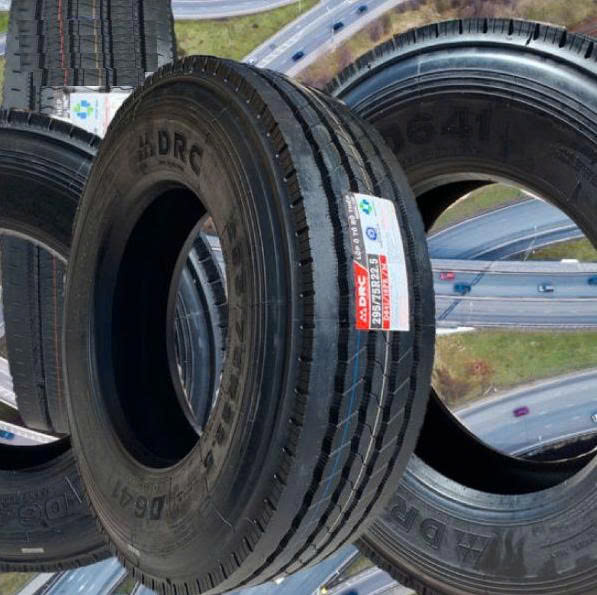
● Anti-counterfeit label (silver seal)
The label must be intact, firmly attached, smooth, and clearly printed.
When scratched or illuminated, security characters should appear visibly.
● Original DRC packaging
- Thick PE wrapping with sharp printing
- Consistent colors
- No peeling or fading
Fake tires usually come with thin, wrinkled, and low-quality packaging.
4. Check tire finishing quality
Genuine DRC tires meet international production standards, so the finishing quality is high. Inspect the following:
● Sharp tread patterns
Tread blocks must be even, without excess rubber or misalignment.
Drainage grooves must be clear and have the correct depth.
● Sidewall free of waves or patches
If you notice:
- Bulges
- Unusual bumps
- Uneven glue lines
→ It is likely a retreaded or recycled tire.
● Natural rubber smell
New DRC tires have a natural rubber scent—not a burnt or strong chemical odor, which is common in reused tires.
5. Check invoices and distribution source
A crucial step in how to identify genuine DRC tires – the key to avoiding counterfeit products – is verifying the distribution source.
● Buy from authorized DRC dealers
DRC has an official nationwide distribution network. When buying, request:
- Warranty card
- VAT invoice
- Delivery note from an authorized dealer
● Verify tire information and price
DRC tires have transparent pricing with no unusual fluctuations.
Sellers offering extremely low prices (30–50% lower) are often selling counterfeit or retreaded products.
6. Verify using tire codes and contact DRC directly
For deeper verification, you can:
● Send the DOT code and QR images to DRC
DRC can confirm:
- Production batch
- Factory release date
- Distributor
- Warranty status
● Get technical consultation from experts
DRC technicians can check:
- Tread depth
- Wear level
- Signs of tampering
This verification is especially useful for transport companies, container trucks, and heavy-duty fleets.
7. Why DRC tires are frequently counterfeited
As a leading Vietnamese tire brand, DRC products are:
- Durable
- High load-bearing
- Suitable for Vietnam’s terrain
→ Making them targets for small workshops who counterfeit or rework old tires for profit.
Common counterfeit types include:
- Retreaded tires with DRC labels
- Smuggled tires re-labeled as DRC
- Old tires with re-engraved tread
- Near-expiry tires re-tagged with new labels
This highlights the importance of knowing how to identify genuine DRC tires – the key to avoiding counterfeit and low-quality products.
8. Expert tips for buying genuine DRC tires
To ensure 100% authenticity, experts recommend:
✔ Buy only from authorized dealers
✔ Carefully check DOT, label, and QR code before payment
✔ Avoid “too cheap” prices
✔ Request a VAT invoice to secure warranty rights
✔ For bulk purchases, inspect tire structure thoroughly
Transport companies should check 100% of incoming tires.
10. Conclusion
Mastering how to identify genuine DRC tires – the key to avoiding counterfeit and low-quality products—not only ensures you choose reputable products but also protects your vehicle, cargo, and passengers.
DRC tires have proven their quality for over 50 years, but to maximize performance, you must ensure you are using authentic DRC products.
Read more: Decoding Tire Markings and How to Read Truck Tire Specifications You Need to Know