
Many drivers and transportation companies often ask: “Are DRC tire suitable for long-distance driving?” when selecting tires for passenger cars, trucks, or buses.
This article provides a technical perspective from DRC experts, offering a comprehensive analysis of tire structure, materials, heat dissipation, durability, road grip, and technical standards to clearly explain DRC tire performance on long journeys.
1. Overall Assessment: DRC Tires Are Designed for Long-Distance Operations
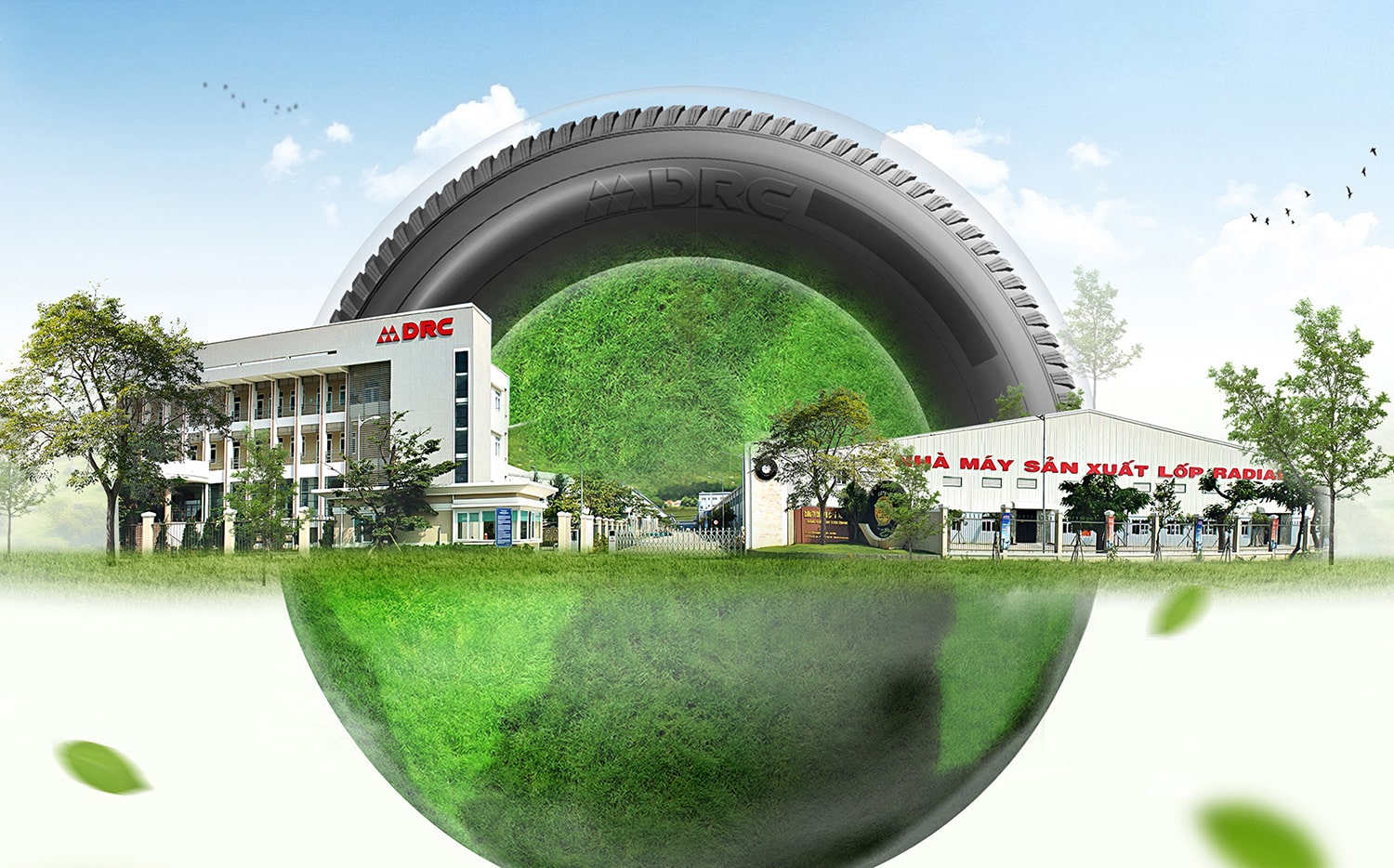
DRC tires have long been recognized for their high durability, strong load-bearing capacity, and adaptability to Vietnam’s harsh climate conditions.
Manufactured under ISO/TS 16949 quality management standards, DRC tires fully meet the requirements of vehicles that operate continuously over long distances.
To determine whether DRC tires are suitable for long-distance driving, three key factors must be evaluated:
- Structural durability
- Heat dissipation and stability at high speeds
- Road grip and ride comfort during continuous operation
These factors directly affect safety and performance when vehicles operate for extended hours on highways, expressways, and mountainous routes.

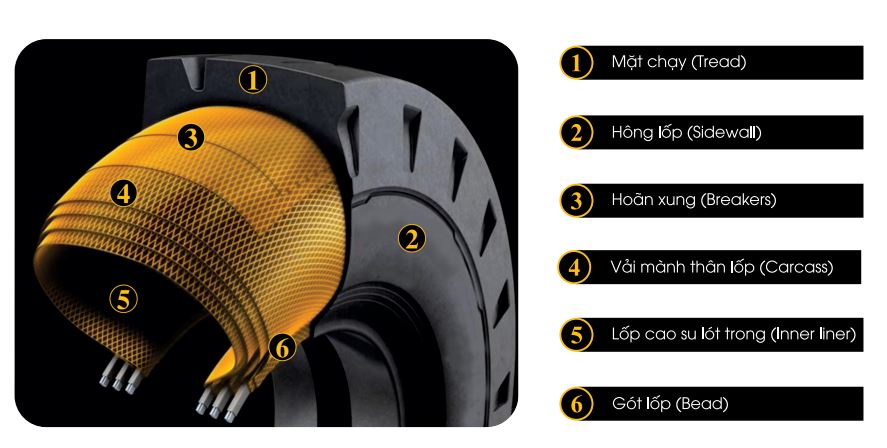
2. DRC Tire Structure – The Foundation for Long-Distance Performance
Radial Steel Belt Technology – Optimized for Trucks and Buses
For heavy-duty radial tire lines, DRC applies:
- High-strength steel belts for superior tensile strength
- A flat tread profile for more even load distribution
- Lower heat generation compared to bias-ply structures
These advantages are especially critical for long-distance driving under heavy loads and high speeds.
Heat-Resistant Rubber Compounds – Reduced Wear
DRC rubber compounds are carefully formulated for each application to:
- Improve wear resistance during continuous operation
- Reduce heat build-up on the tread
- Maintain stable elasticity even after long hours on hot road surfaces
This helps minimize risks such as cracking, bulging, or ply separation commonly associated with long-distance driving.
Optimized Tread Design
Key strengths of DRC tread patterns include:
- Longitudinal ribs for stable rolling and improved fuel efficiency
- Transverse grooves and compound optimization for better grip on wet and mountainous roads
- Deep tread grooves to extend service life during long-haul operations
As a result, DRC tires maintain stability and reliable traction throughout extended journeys.
3. Heat Dissipation – A Critical Factor for Long-Distance Driving
Heat management is a decisive criterion in evaluating long-distance tire performance.
Superior Heat Dissipation
DRC tires utilize:
- Low heat-generation rubber compounds
- Radial structures that reduce internal friction
- Deep, open tread grooves to release heat more efficiently
This significantly reduces heat accumulation—one of the leading causes of tire blowouts.
Thermal Stability at High Speeds
During long-distance and high-speed driving, tire temperatures can rise rapidly.
DRC tires maintain thermal stability through:
- Reinforced shoulder structures for improved heat dissipation
- Multi-layer rubber construction for even heat distribution
- Enhanced heat resistance of reinforced steel belts
The result is reduced deformation, slower degradation, and lower risk of sudden tire failure.
4. Road Grip and Stability – Ensuring Safety on Long Journeys
A long-distance tire must deliver both durability and driving stability.
- Strong traction on highways and national roads
- Effective water evacuation in rainy conditions
- Shorter braking distances at high speeds
Thanks to reinforced sidewalls, DRC tires also:
- Minimize lateral sway
- Deliver smoother driving performance
- Reduce driver fatigue during long-distance trips
5. Fuel Efficiency – A Key Advantage of DRC Tires
Fuel efficiency is a critical consideration for long-haul operations.
Low Rolling Resistance
Radial construction and steel belt technology help:
- Reduce rolling resistance
- Improve drivetrain efficiency
- Save approximately 5–12% in fuel consumption compared to non-optimized tires
Optimized for Long-Haul Trucks and Buses
DRC tires are engineered to:
- Reduce premature wear
- Maintain stable air pressure
- Optimize wheel rotation consistency
This enables transport operators to significantly reduce operating costs.
6. Durability – A Major Strength of DRC Tires
- Extended service life under long-distance and mountainous driving conditions
- High load index, suitable for heavy trucks, container vehicles, and sleeper buses
- Enhanced resistance to punctures and cuts from stones, road edges, and construction sites
7. Real-World Feedback from Long-Haul Operators
Market feedback indicates that:
- Long-haul buses operating North–South routes value the smooth ride and strong traction of DRC radial tires
- Long-distance trucks report long tire life with minimal degradation
These real-world results further confirm the suitability of DRC tires for long-distance driving.
8. Recommendations for Optimal Long-Distance Performance
- Maintain tire pressure at recommended levels
- Rotate tires every 7,000–10,000 km
- Replace tires when the tread reaches the TWI indicator
- Avoid overloading, which can reduce tire life by 20–40%
Conclusion: Are DRC Tires Suitable for Long-Distance Driving?
The answer is: Absolutely yes.
DRC tires deliver outstanding long-distance performance thanks to:
- Robust structural design
- Excellent heat dissipation
- Stable road grip
- Improved fuel efficiency
- Long service life
For drivers and transportation businesses engaged in long-distance operations, DRC tires are a reliable, economical, and safe choice.
Read more: Top Truck Tire Brands with the Best After-Sales Service