
Choosing the right tires for heavy-duty trucks is a critical decision that directly impacts safety, operating costs, and vehicle performance. Drawing from Experience in Choosing the Right DRC Tire for Heavy-Duty Trucks , this guide provides practical insights into load capacity, tread patterns, construction types, and real-world operating conditions. By understanding key technical factors and common mistakes, transport businesses can select the most suitable DRC tires to ensure durability, efficiency, and long-term cost optimization in demanding working environments.
1. Why Choosing the Right Heavy-Duty Truck Tire Matters So Much
Based on Experience in Choosing the Right DRC Tires for Heavy-Duty Trucks, one of the most critical factors affecting safety and operating efficiency lies in tire selection. Heavy-duty trucks operate under extremely harsh conditions: high loads, long-distance routes, complex terrains, and severe weather. Tires must therefore withstand tremendous stress from:
-
Constant high load and friction
-
Heat build-up during long-distance driving
-
Poor road conditions with potholes, rocks, and debris
Choosing the wrong type of tire (insufficient load capacity, weak casing, unsuitable tread pattern) can lead to:
-
Tire blowouts, sidewall cracks, uneven wear
-
Increased fuel consumption
-
Reduced braking efficiency and vehicle stability
Selecting the correct tire is essential to ensure safety, durability, and optimized cost of operation.
2. Key Features of DRC Heavy-Duty Truck Tires
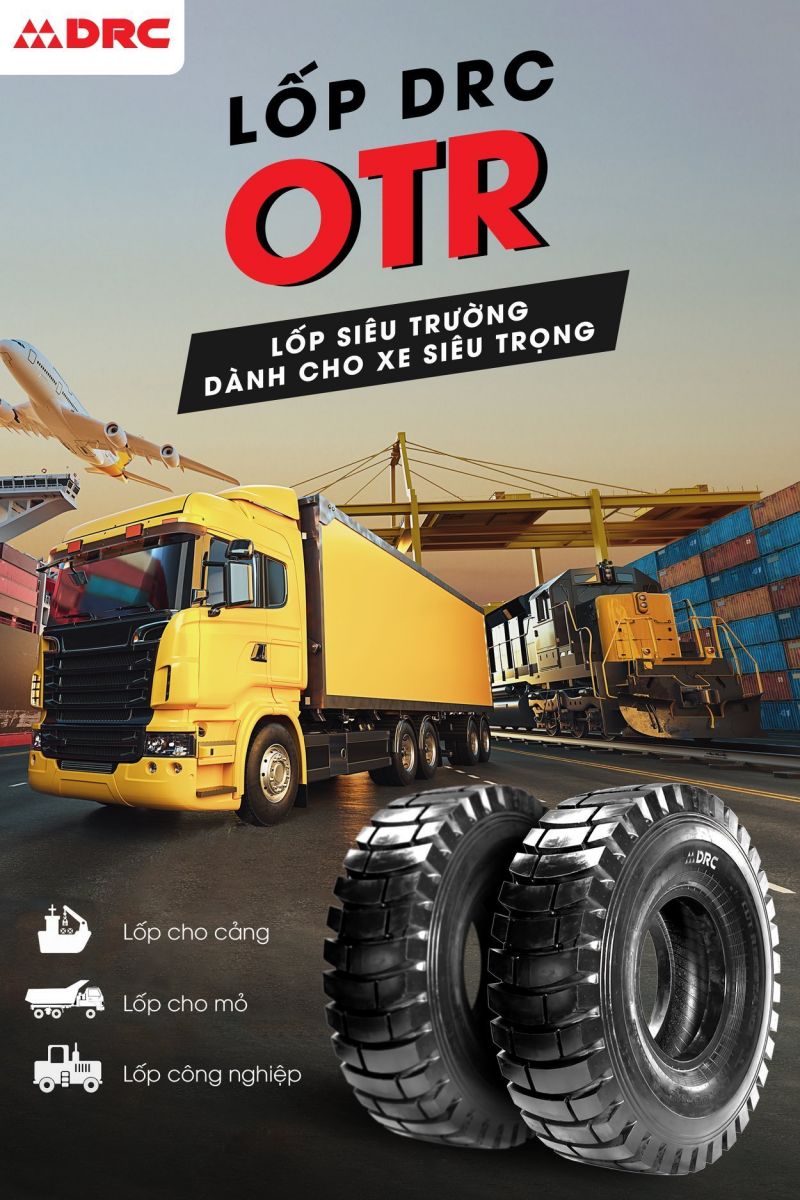
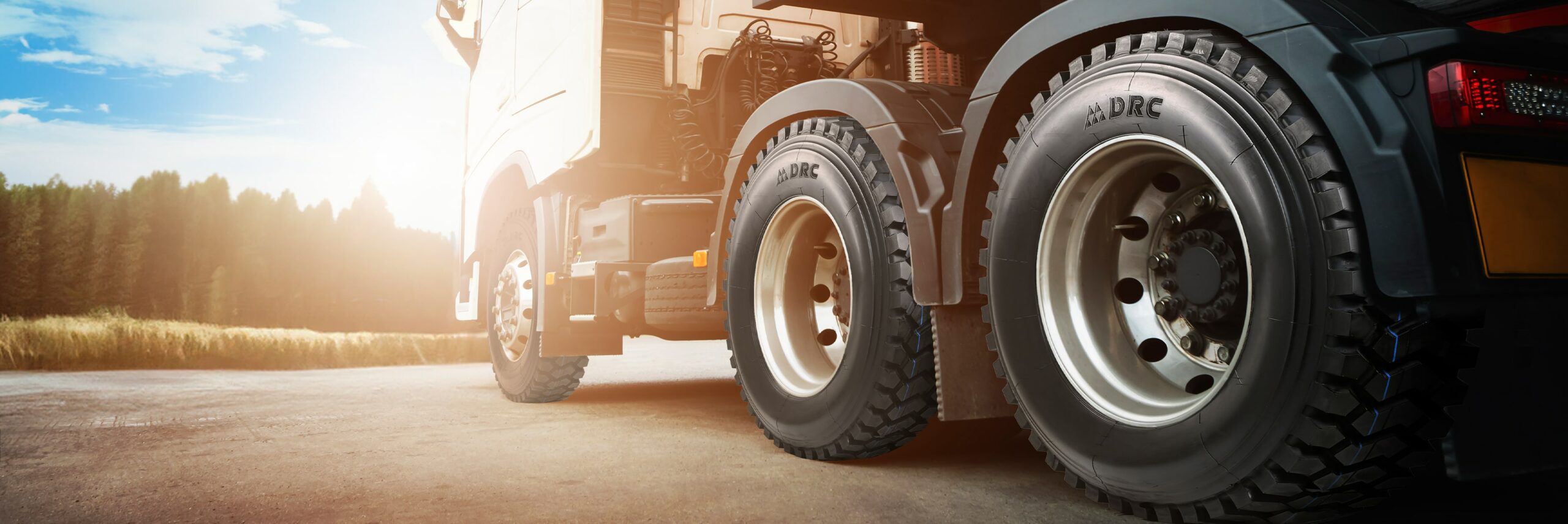
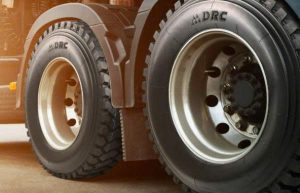
With over 50 years of expertise in the rubber and tire industry, DRC (Danang Rubber Joint Stock Company) is recognized as one of Vietnam’s leading manufacturers in the truck, heavy-duty, and industrial tire segment trusted by many transport companies through years of real-world experience in choosing the right DRC tires for heavy-duty trucks.
DRC’s heavy-duty truck tires stand out thanks to:
-
Steel Radial or Nylon Bias construction designed for superior load-bearing capacity
-
High-quality natural rubber compound combined with advanced mixing technology for improved wear resistance
-
Optimized tread designs tailored for specific terrains—from highways and national roads to quarries and construction sites
-
Compliance with international standards such as ISO 9001:2015, DOT (USA), and E-Mark (Europe)
These advantages enable DRC tires to operate reliably in harsh conditions, reduce downtime, lower operating costs, and enhance fleet efficiency.

3. Step-by-Step Guide: How to Choose the Right DRC Tire for Heavy-Duty Trucks
Step 1: Determine Load Requirements and Operating Purpose
Load capacity is the most critical criterion. Each truck type (10T, 15T, 20T, etc.) requires a different Load Index.
Practical experience:
- If your truck usually operates at full load or slightly overloaded, choose a DRC tire with 5–10% higher Load Index than the vehicle manufacturer recommends.
- If your truck runs long distances frequently, choose tires with excellent heat dissipation and long tread life.
Step 2: Select the Appropriate Tread Pattern for Your Operating Terrain
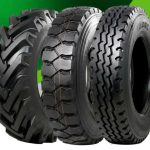
Heavy-duty tires come in multiple tread patterns, and choosing the right one significantly affects performance.
Step 3: Pay Attention to Ply Rating (PR) and Tire Construction
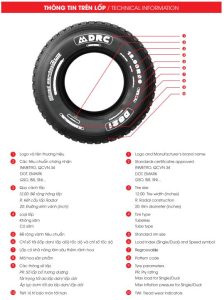
Ply Rating (PR) reflects the tire’s load capacity.
- 16PR, 18PR, and 20PR tires are commonly used for heavy-duty trucks.
- Higher PR = higher load capacity but also increased stiffness.
For trucks operating frequently in construction or mining environments, select DRC tires with at least 18PR, such as DRC 12.00-20 18PR, a highly durable bias tire trusted by many heavy-duty transport companies.
Step 4: Choose Between Radial and Bias Construction
Step 5: Prioritize Reputable Brands, Genuine Products, and Authorized Distributors
As counterfeit or unverified products appear increasingly on the market:
- Always buy genuine DRC tires from authorized dealers (listed at www.drc.com.vn).
- Check anti-counterfeit labels, QR codes, DOT markings, and serial numbers.
- Request VAT invoices and official warranty cards to protect your rights.
4. Common Mistakes When Choosing Heavy-Duty Truck Tires
- Focusing only on price while ignoring technical specifications
→ Result: fast wear, blowouts, increased fuel consumption. - Using mismatched tires on the same axle
→ Causes uneven wear and reduced lifespan. - Choosing incorrect tire size
→ Affects transmission ratio, braking performance, and gearbox operation. - Ignoring tire operating temperature
→ Bias tires are not suitable for high-speed highway driving due to excessive heat build-up.
5. Proper Maintenance to Maximize DRC Tire Lifespan
After selecting the right tire, consistent maintenance is crucial for long-term performance.
Key technical recommendations:
- Check tire pressure weekly and maintain levels according to DRC guidelines (usually 90–120 psi depending on size).
- Rotate tires every 15,000–20,000 km to avoid uneven wear.
- Avoid overloading and exceeding the designed speed rating.
- Regularly inspect tires for cracks, cuts, bulges, or embedded objects.
Understanding Experience in Choosing the Right DRC Tires for Heavy-Duty Trucks not only enhances driving safety but also brings significant economic benefits to transport businesses.
A genuine DRC tire selected correctly, installed properly, and maintained consistently will help you optimize operating costs, reduce fuel consumption, and ensure absolute safety on every journey.
Read more: Save Fuel with the Right Tips for Using DRC Truck Tires