
Rubber is a material that naturally ages over time even when not in operation. Therefore, understanding the correct method of properly storing DRC tire when not in use is essential for all transportation units and warehouse facilities. The detailed analysis below presents the standard technical storage procedure to prevent cracking, deformation, and maintain optimal tire quality.
1. Why Must You Follow a Strict Tire Storage Procedure?
A common misconception is that “new tires that have never been used cannot deteriorate.” From a technical perspective, a tire is a composite structure made of natural rubber, synthetic rubber, carbon black, and steel belts. These materials are extremely sensitive to environmental conditions. If storage standards are ignored, the tire is exposed to three major risks:
Aging due to oxidation and UV exposure
Direct exposure to sunlight or heat breaks down the polymer chains in rubber, leading to surface cracking, hardening, and reduced elasticity (hysteresis).
Mechanical deformation
Improper stacking over long periods creates concentrated pressure on the tire casing, causing distortion. A deformed tire will shake, become dynamically unbalanced when mounted on a vehicle, and cannot be corrected.
Chemical structural damage
Contact with oils, solvents, or chemicals causes the rubber to swell, soften, and may even lead to separation between rubber and steel belts.
Therefore, applying the proper method of Properly storing DRC tires when not in use is a preventive measure to ensure the tire remains in optimal technical condition when released from storage.
2. The Golden Rules for Storing DRC Tires
To maximize tire lifespan during storage, strict control over environmental conditions and stacking methods is required, as outlined below:
a. Control the storage environment
Temperature and humidity:
The storage area must be dry, cool, and well-ventilated. Temperature should remain stable, avoiding overheated areas or sudden temperature changes.
Keep away from harmful sources:
Never store tires near heat sources (heaters, steam pipes), electrical equipment that produces sparks or ozone (generators, air compressors, electric motors). Ozone is a major agent that accelerates rubber aging.
Also avoid storing near chemicals, lubricants, or volatile solvents.
b. Completely isolate tires from the ground
According to technical recommendations, tires must never be placed directly on cement floors, soil, or asphalt.
Reason:
Cement floors can absorb or release moisture into the tire, causing corrosion of internal steel cords.
Asphalt contains hydrocarbon compounds that can damage rubber.
Solution:
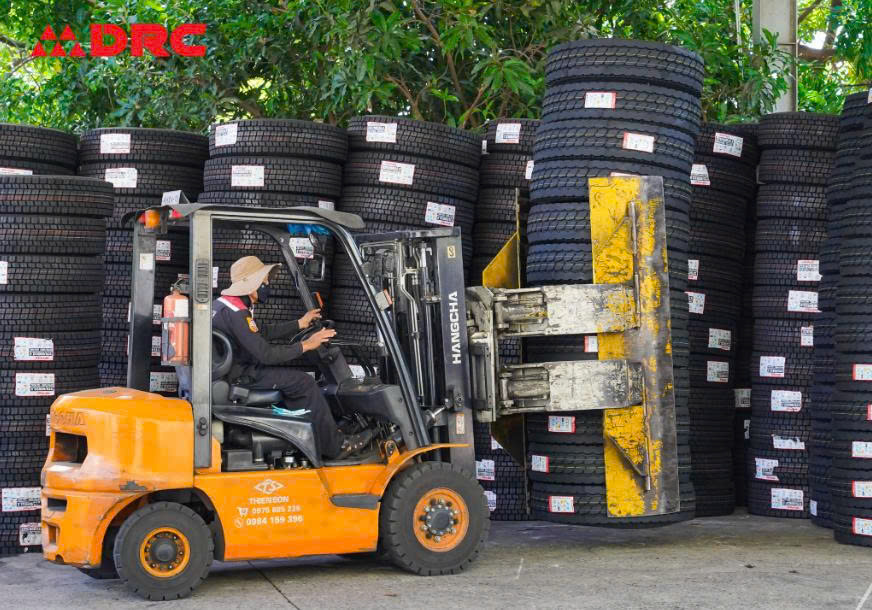
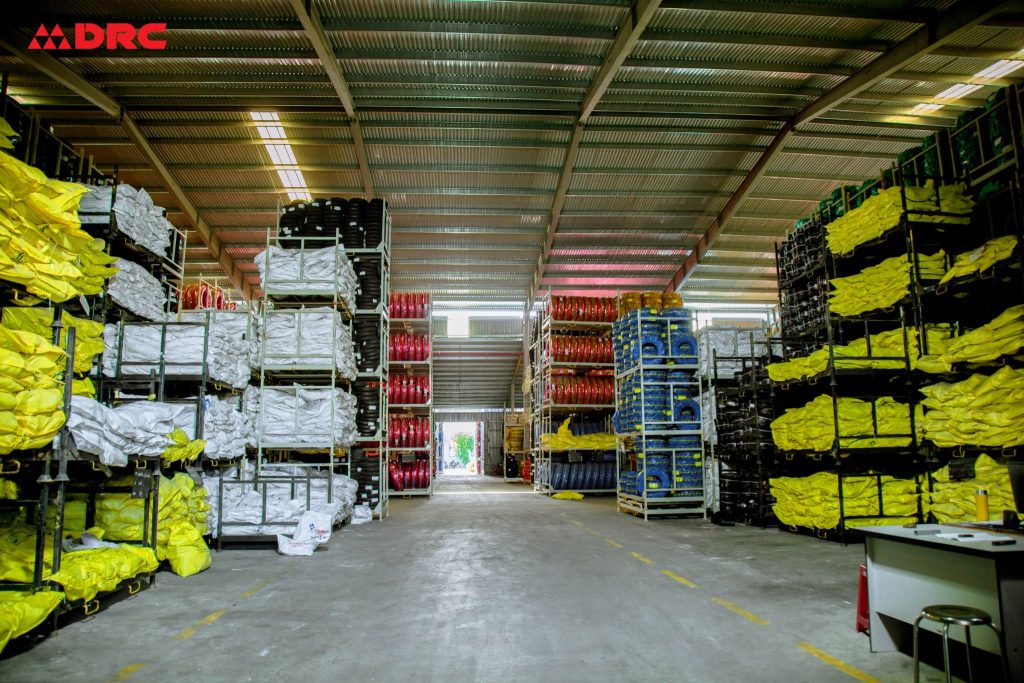
Tires must be placed on racks, wooden pallets, or thick cardboard/plastic sheets.
c. Tire stacking standards (Stacking Standards)
Depending on the tire’s condition, proper storage methods when not in use are different:
For bare tires (not mounted on rims)
Method: Store tires upright (vertically) on racks.
Handling: Rotate the tire every 4 weeks to change the pressure contact point and avoid flat spotting.
Prohibitions:
- Never hang tires with hooks (damages the bead).
- Avoid excessive horizontal stacking, which flattens the lower tires.
For tires mounted on rims
Method: Stack horizontally or hang them on racks.
Reason: Once mounted on rims, the tire has a stable, reinforced structure capable of supporting vertical compression.
Prohibitions:
Avoid keeping the tire upright for long periods because the concentrated weight on a small contact patch may deform the tread area.
d. Covering and surface protection
Use protective covers, tarps, or specialized plastic bags to keep dust from entering grooves and to block UV rays.
Technical caution:
Do not wrap tires too tightly in a hot, humid environment. This creates a greenhouse effect, leading to condensation inside the cover and accelerating oxidation. Ensure ventilation.
e. Regular inspection and maintenance
Storage procedures do not end after closing the warehouse. A monthly or bi-monthly inspection schedule is required:
- Visual inspection for early signs of cracks or mold.
- Rotate tire positions (FIFO: First In – First Out).
- Clean off dust when necessary to keep rubber surfaces in optimal condition.
3. Additional Important Notes
To complete the process of properly storing DRC tires when not in use, experts emphasize:
Avoid bare metal hooks
When hanging tires with rims, always use padded hooks or wide ropes. Never scratch or deform the bead area – the most critical zone for airtight sealing.
Avoid water accumulation
Never allow rainwater or standing water inside the tire cavity. This is a leading cause of imbalance and internal steel belt deterioration.
Inspection before reuse
For tires stored long-term (over 6 months), check rubber flexibility and look for aging cracks before installing on vehicles.
Conclusion
Strictly following the technical standards for properly storing DRC tires when not in use is essential for maintaining performance, ensuring safety, and optimizing investment efficiency. A properly stored tire will retain its factory quality, offering complete confidence on every journey.
For advanced technical consultation and transportation solutions, please contact the official DRC distribution and warranty system.
Read more: Common Mistakes When Using Truck Tires You Should Know