
Those alphanumeric codes like 11.00R20, 295/80R22.5, or 152/149K on the tire sidewall can be confusing. This guide provides a clear and technical explanation of how to Read DRC Tire Specifications, helping you select the right tire for your vehicle and optimize safety and performance.
1. Position and General Meaning of Markings on DRC Tires
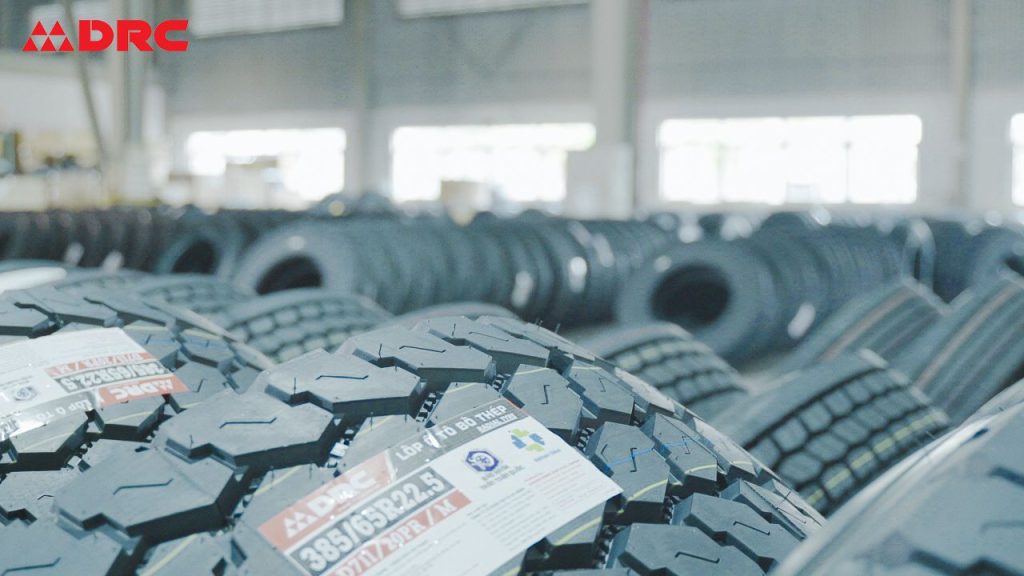
On the tire sidewall, you will find markings such as:
- 11R22.5 148/145M
- 295/80R22.5 152/148L
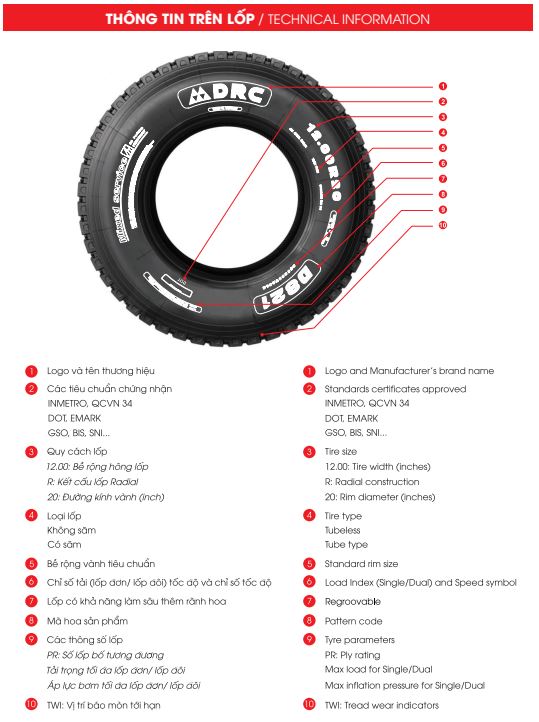
Each marking represents crucial information about tire structure, size, load capacity, speed rating, and manufacturing standards.
Understanding How to Read DRC Tire Specifications becomes simple when you focus on these five key information groups
- Tire Size
- Tire Construction (Radial or Bias)
- Load Index
- Speed Rating
- Additional Markings (DOT, M+S, TWI, maximum pressure…)
These specifications serve as the “identity card” of the tire – indicating what vehicle it suits, how much load it can carry, at what speed it can operate safely, and whether it complies with international standards.
2. Detailed Breakdown of Each Specification – Example Illustration
Example: 11R22.5/D812 16PR 148/145M, a common heavy-duty radial tire produced by DRC.
| Component | Meaning | Technical Description |
| 11 | Section width | 11 inches ≈ 280 mm |
| R | Radial construction | Steel belts arranged perpendicular to rotation |
| 22.5 | Rim diameter | Fits 22.5-inch standard truck rims |
| D812 | Tread pattern code | Identifies DRC’s specific design |
| 16PR | Ply Rating | Equivalent load capacity of 16 plies |
| 148/145 | Load Index | 148 = 3,150 kg (single) / 145 = 2,900 kg (dual) |
| M | Speed rating | Maximum safe speed: 130 km/h |
Understanding each specification helps prevent errors such as mismatching tire sizes or selecting insufficient load capacity – critical for safe long-distance operation.
3. Tire Construction – The Foundation of Durability and Performance
In DRC tire specifications, “R” or “-” distinguishes two construction types:
– Radial Tires (R)
- Steel belts run perpendicular to the direction of travel
- Advantages: low heat generation, even wear, improved fuel efficiency
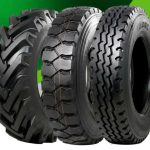
- Ideal for long-haul trucks and passenger buses
- Applied in DRC Radial, built with European-standard technology
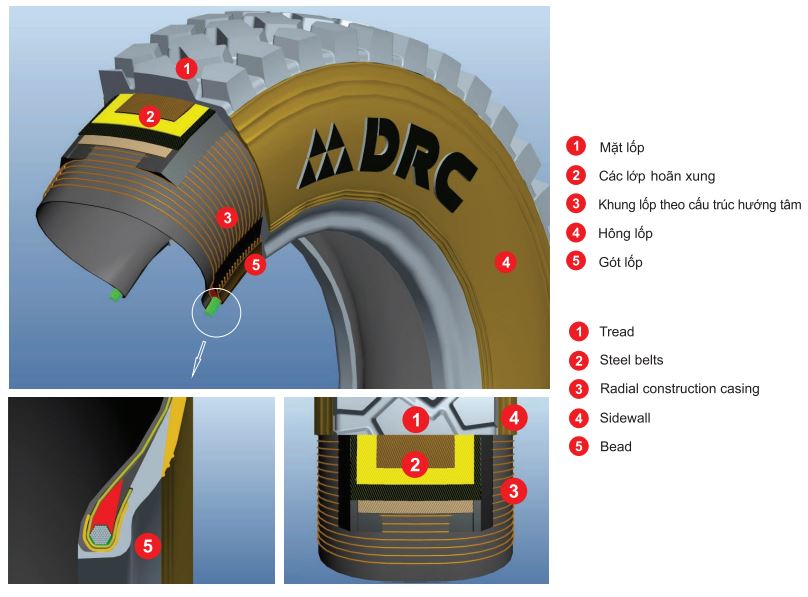
– Bias Tires (-)
- Body plies laid diagonally across each other
- Advantages: high resistance under heavy loads, lower cost
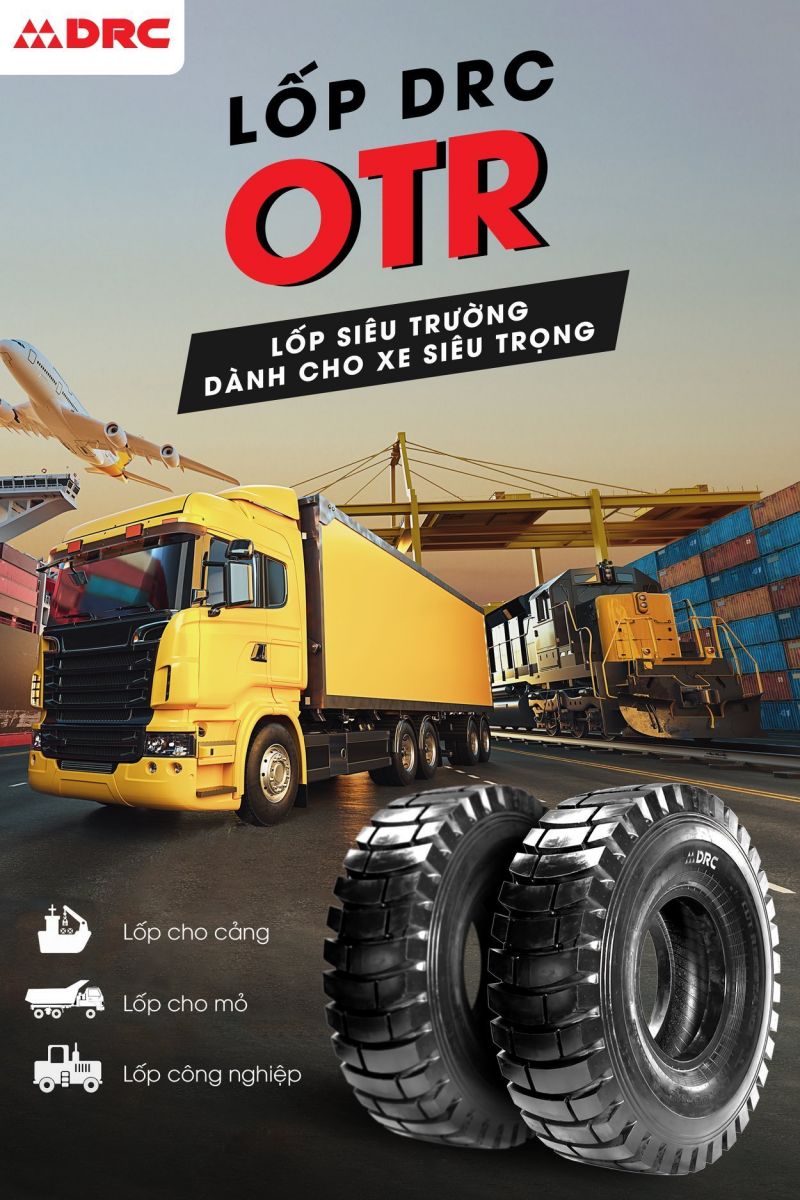
- Suitable for construction vehicles and harsh terrain
Understanding the construction type helps select the right DRC tire for road, mixed, or off-road conditions.
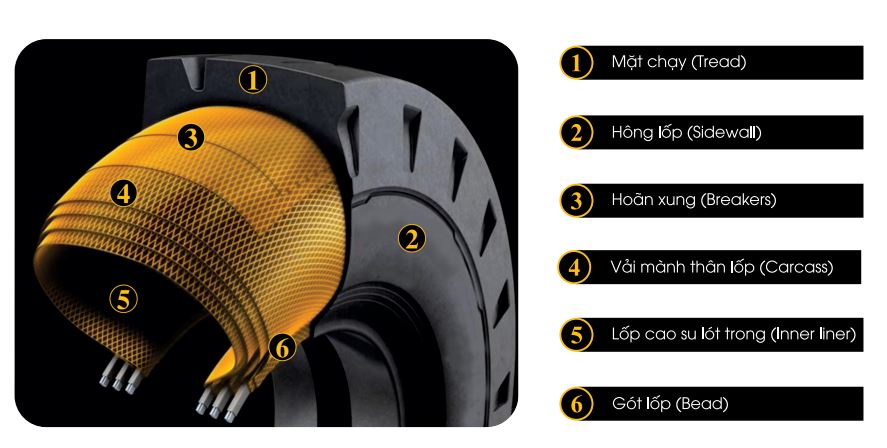
4. Load Index – A Critical Safety Specification
Each tire has a maximum load capacity, represented by the Load Index.
Example:
- 148 = 3,150 kg per single tire
- On dual fitment → 6,300 kg per axle
Choosing a tire with a lower load capacity than required leads to overheating, deformation, and high risk on steep or hot roads.
Choosing a tire with a much higher load rating results in stiffness and increased fuel consumption.
→ Always compare your vehicle’s recommended load rating with DRC’s Load Index tables.
5. Speed Rating – Directly Impacting Driving Safety
The final letter in the specification indicates the maximum safe operating speed.
| Speed Rating | Maximum Speed (km/h) |
| J | 100 |
| K | 110 |
| L | 120 |
| M | 130 |
| N | 140 |
→ Vehicles traveling on highways should choose tires rated L or higher to ensure heat resistance and stability.
→ This is especially important for DRC Radial tires.
6. Additional Markings to Pay Attention To
DRC tires also include various supplementary markings that indicate quality and manufacturing compliance.
| Marking | Meaning | Notes |
| DOT | U.S. safety standard code | Includes plant code + week/year of manufacture |
| TWI | Tread Wear Indicator | Signals when the tire needs replacement |
| M+S | Mud & Snow rating | Suitable for slippery terrain |
| MAX PRESSURE | Maximum inflation pressure | Never exceed this limit |
These markings are essential for assessing tire condition and ensuring correct usage.
7. Practical Guide: How to Read DRC Tire Specifications Effectively
A simple 3-step process to choose the correct DRC tire:
Step 1: Check your current tire
Read the sidewall marking such as 11R22.5 148/145M and note it down for comparison.
Step 2: Identify usage conditions
- Highway roads → Rib pattern
- Mixed roads (paved + gravel) → Lug pattern
- Construction/off-road → Deep Lug pattern
Step 3: Compare with DRC’s technical catalog
Each DRC tire model includes a full table of specifications (load, speed, recommended pressure). Match these with your vehicle’s requirements.
8. Common Mistakes When Reading Tire Specifications
Many users make the error of choosing tires based only on rim size, ignoring load and speed ratings.
This leads to:
- Uneven wear and increased fuel consumption
- Tire blowouts under overload or incorrect pressure
- Loss of traction on wet or inclined roads
- 30-40% reduction in tire lifespan due to incorrect tread pattern selection
Mastering How to Read DRC Tire Specifications properly is the key to avoiding these risks and significantly improving vehicle longevity.
9. DRC Advantages in Tire Marking and Quality Control
Unlike low-cost brands, DRC applies strict quality control standards to every marking:
- Laser-engraved sidewall markings ensure clarity and long-term durability
- All specifications are verified according to DOT and ISO 9001
- QR codes on labels allow quick access to technical data, production batch, and warranty information
This ensures customers receive genuine, high-quality DRC products and avoid counterfeit tires on the market.
10. Conclusion – Reading Tire Specifications to Optimize Performance
Understanding tire specifications enables you to:
- Reduce fuel and maintenance costs
- Extend tire lifespan
- Improve safety on long-distance routes
- Maintain overall vehicle stability and efficiency
When you fully understand how to read DRC tire specifications, tire selection becomes a technical, informed decision, not guesswork – helping you operate your vehicle with confidence and optimal performance.
Read more: Detailed Guide on How to Inspect and Replace DRC Truck Tires