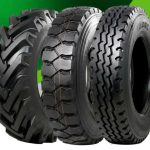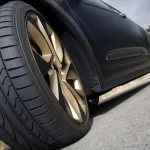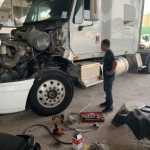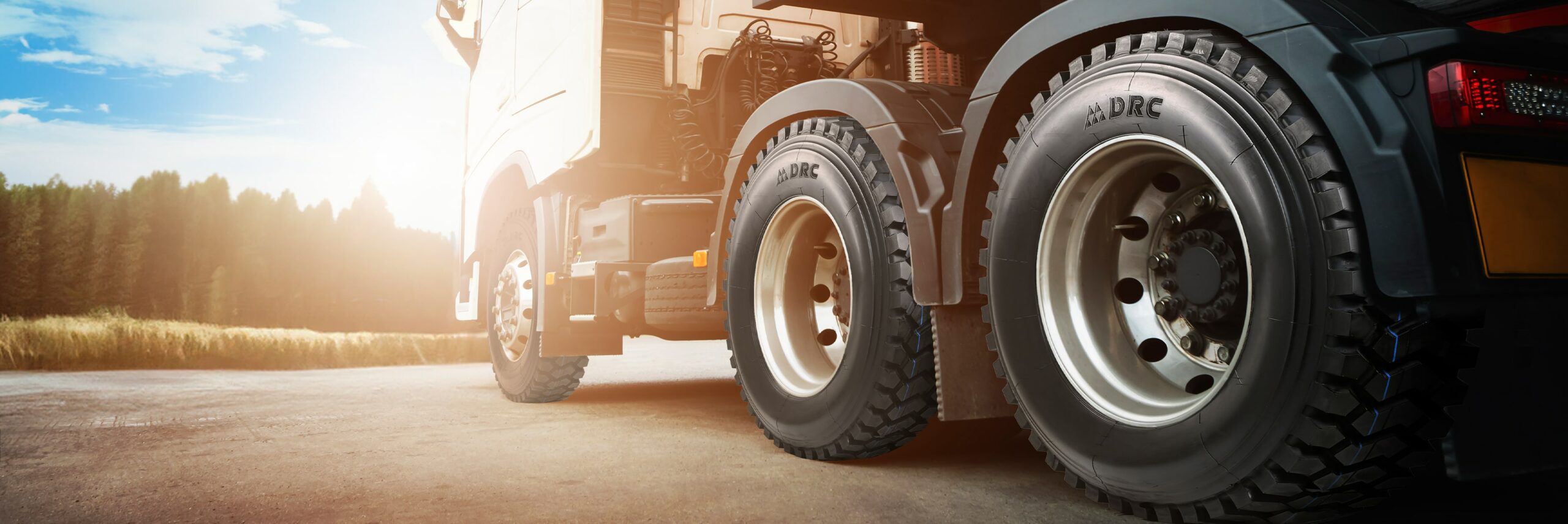

Tires are the only part of a vehicle that directly contacts the road – constantly bearing load, braking force, and friction during every trip. Therefore, even when made from high-quality rubber and durable steel belts, tires will still wear unevenly over time.
This is also the reason Why should you rotate your car tires regularly a small maintenance task that brings major benefits in extending tire life, maintaining stability, and ensuring driving safety.
1. What is tire rotation and why is it necessary?
Tire rotation is the process of switching the positions of the tires according to proper technical procedures to distribute wear more evenly. Under normal driving conditions, front tires typically wear faster because they handle steering, braking, and engine load.
If you skip regular tire rotation, uneven tire wear may lead to:
- Vibration, pulling, or instability at high speeds
- Increased fuel consumption due to uneven road contact
- Shortened tire and suspension lifespan
- Reduced traction, causing safety risks
Therefore, tire rotation is not just a technical step — it is a smart maintenance practice that helps the vehicle operate smoothly, efficiently, and safely.
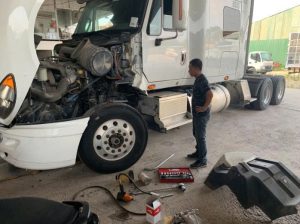
2. Why should you rotate your car tires regularly?
Most tire manufacturers and car brands recommend regular tire rotation because each tire position experiences different loads and friction.
Below are key reasons explaining why tire rotation is necessary:
2.1. Helps tires wear evenly – extends service life
Front-wheel-drive cars wear front tires faster; rear-wheel or all-wheel-drive vehicles show different wear distribution. Proper tire rotation helps each tire share the load and friction, making wear more even by 20–30% and extending overall tire life.
2.2. Improves handling and vehicle control
Uneven wear can cause pulling, steering vibration, and longer braking distance. Tire rotation helps maintain consistent traction, enhancing cornering performance — especially useful for heavy-load vehicles or long-distance driving.
2.3. Saves fuel consumption
Uneven tire wear increases rolling resistance, forcing the engine to work harder. Regular tire rotation can help save 3–5% fuel compared to poorly maintained vehicles.
2.4. Ensures driving safety on all types of terrain
Tires act as a shield against road hazards. When one or two tires wear faster, braking balance is disrupted — increasing the risk of skidding or losing control at high speeds.
Proper tire rotation is one of the most effective ways to enhance driving safety.
3. When should car tires be rotated?
Depending on usage conditions, technicians recommend:
- Every 8,000 – 10,000 km for passenger cars
- Every 5,000 – 7,000 km for light trucks or vehicles carrying heavy loads or driving long distances
- Immediately if uneven wear, steering vibration, or pulling is detected
Combining tire rotation with regular oil changes is a practical routine to save time while ensuring safety.
4. Common tire rotation patterns
Not all rotation patterns are suitable for every vehicle. Depending on drivetrain type (FWD, RWD, AWD), technicians will choose the appropriate method.
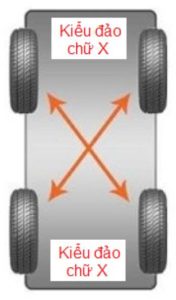
4.1. X-pattern rotation (Front-wheel drive)
Front tires cross to the rear and vice versa.
Advantage: Promotes faster even wear and easy implementation.
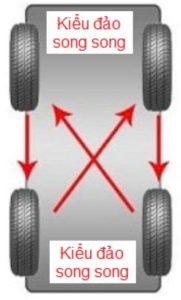
4.2. Rearward-cross pattern (Rear-wheel drive)
Front tires move straight to the rear; rear tires cross to the front.
Advantage: Maintains tread direction — ideal for trucks or heavy-load vehicles.
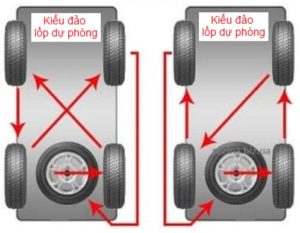
4.3. Five-tire rotation (including a full-size spare)
Spare tire is rotated into use if it has identical specifications.
Advantage: Helps all five tires wear evenly and maximizes total lifespan.
5. Important notes when rotating tires
For maximum results, tire rotation should follow technical standards:
- Check and adjust tire pressure before and after rotation
- Perform wheel balancing to prevent vibration at high speeds
- Inspect wheel alignment — a major cause of uneven wear
- Do not reverse tread direction for directional tire designs
- Record date and mileage after each rotation to maintain proper service intervals
6. Regular tire rotation – small action, big benefits
As shown above, regularly rotating car tires is a valuable recommendation that should never be overlooked. It is not just basic maintenance but a key practice to help your car operate smoothly, reduce operating costs, and ensure maximum safety on every journey. DRC Tire – Danang Rubber Joint Stock Company
Read more: The Most Accurate Signs That Your DRC Tires Need Replacement